
By: Hanna Nakano
Building screen-free, relationship-based hobbies may sound like a relic of the pandemic era, but in Davis and beyond, a growing number of players are fueling a quiet resurgence at the Mah Jongg table.
Named a top trend of 2026 by Yelp, Mah Jongg has developed a close-knit following of players across the country. Nationwide, Eventbrite reports a 179% increase in Mah Jongg events—and it’s a booming business for global game makers too, with the market projected to grow from $1.9 billion in 2024 to $3 billion by 2035, according to Wise Guy Reports.
For many, it’s the relationship building, in addition to the tile-building, that has cemented this tactile game into a way of life.
“People have done PhDs on the fact that this part of the game is the best part for socialization, because it’s about a 10 minute period of time when you reveal things to each other,” Janice Bridge, who teaches Mah Jongg at the Davis Senior Center, told The Dirt. “It’s short enough that you don’t have to go into detail. It’s fascinating.”
Mah Jongg is a tile-based game that shares similarities with card games like rummy and bridge, in which players build hands from a set of drawn pieces while navigating strategy and chance. But unlike those games, Mah Jongg never stays the same for long. The hands players are trying to build change every year and are dictated by an official card from the National Mah Jongg League.
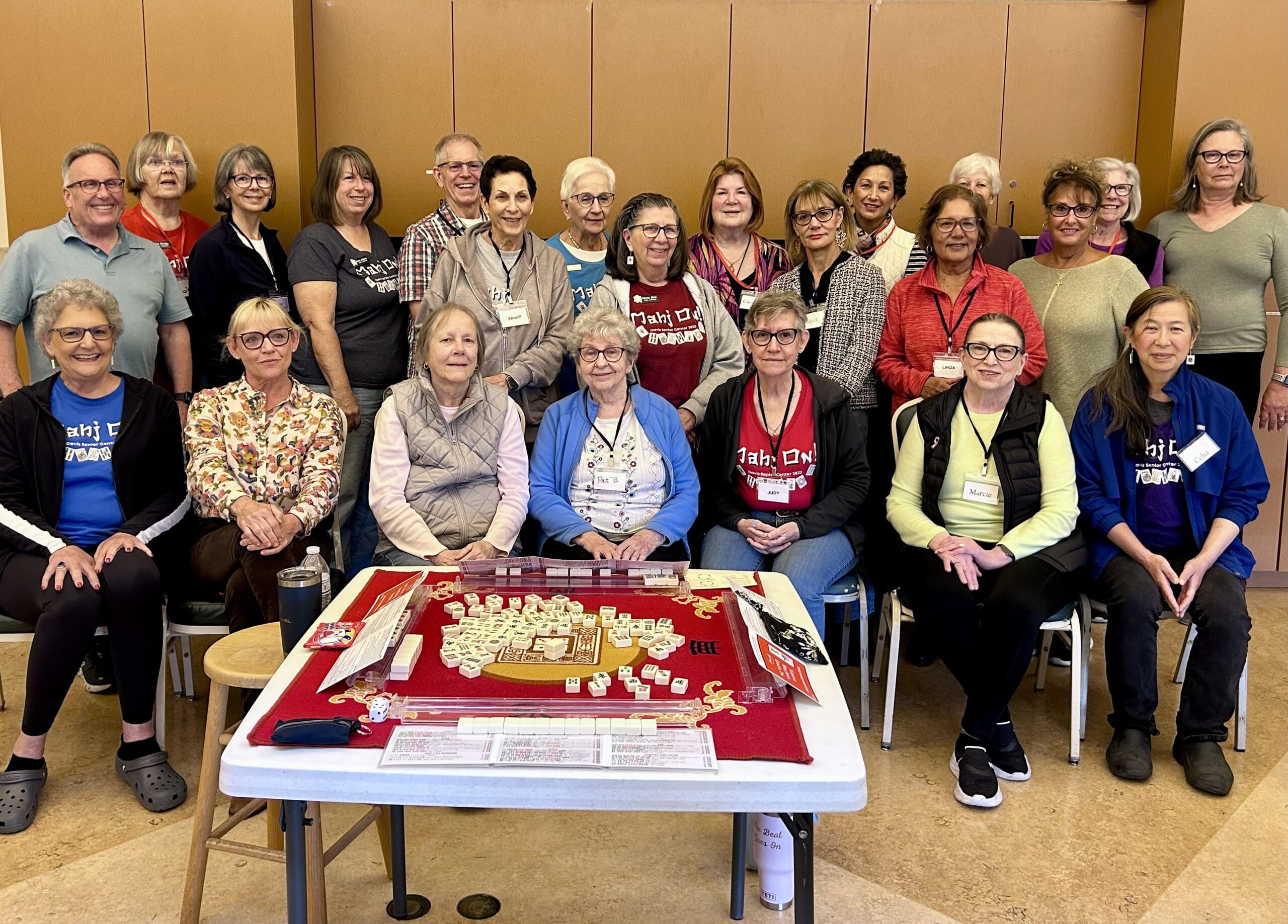
Every Monday at the Davis Senior Center, you can hear the games starting before you walk in the room. The click-clacking of tiles welcomes both newcomers and those who have been playing for decades.
To play at the Senior Center, you just need two things: an official card—and patience.
“I started playing in 2009 and at that time the only way to learn Mah Jongg in Davis that I had access to was to go to the Senior Center and sit at a table and watch it being played,” Bridge said. “And so you watch for a while then someday somebody doesn’t show up and they say, ‘oh why don’t you try it?’”
Now she teaches the game, and leads a group with a listserv of more than 60 local members. The teachers at the Senior Center have developed a curriculum, and because of its popularity, have begun charging Mah Jongg members a suggested $50 donation to the Senior Center.
“There is a special sound that goes with it, the tiles,” Bridge explained. “This is one of the things that we think the benefit of being taught in person as opposed to learning on TV is that you’re hearing the tiles. You’re touching the tiles. When we teach we make sure the tutors never sit in the chairs that are playing, they sit on the corner and provide advice.”
The tile suits—dots, bams, and cracks—are a language of their own. But once a player masters that, the joy of making sound strategy decisions takes hold.
“Mah Jongg rewards decision making with flexibility. People who have to have one right answer are terribly frustrated and don’t stay with it,” Bridge told The Dirt. “But people who like to make decisions and can be flexible about it, and can see multiple opportunities in the same area love it.”
And at the Davis Senior Center, there’s a tiny added bonus: you could win a quarter.
“We have a $5 limit,” Bridge explains. “You bring your coins in your purse, and everybody’s got their own little coin purse, and you pay out a quarter if you lose, sometimes it might be 50-cents. I’ve actually, at one time, had to pay out $1.20 for one hand—but it was a perfect hand. It was gorgeous.”
The tiles themselves can be described as gorgeous, as well. An American Mah Jongg set consists of 152 tiles, typically priced between $60-200.
Introduced to the United States in the 1920s, Mah Jongg quickly became a popular social game among American women by offering a structured, communal form of leisure.
Leisure—and 50 minutes of no invisible labor—is what makes this game so important to many players.
“I love it and I think that, particularly for women, the opportunity to not be responsible to anybody other than yourself is a big thing,” Bridge said. “It’s a group experience, but you’re only playing for yourself.”
Games at the Davis Senior Center are held Mondays from 12p—4p, and are open to all ages. You don’t have to own your own Mah Jongg set to join, you just need to know how to play or have willingness to watch and learn. New players can arrive at noon to watch and be guided by instructors. To play a game, you just need your own Mah Jongg card. They’re $14 and available at nationalmahjongleague.org. If you’d like to join the listserv to stay in the loop about upcoming events at the Senior Center, email Bridge at janice.bridge@gmail.com.